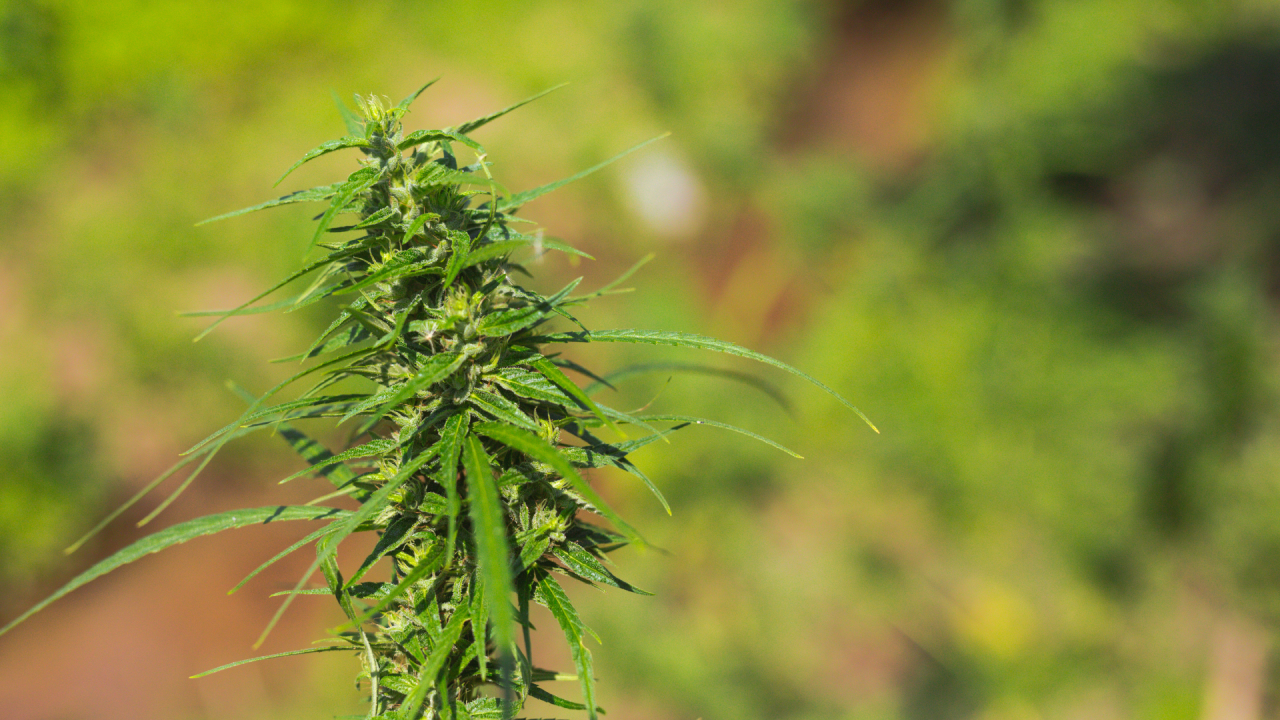
Cannabis Lab Test Results, Explained: THC, THCA, Terpenes and What the Rest Means
Legal cannabis comes with a laboratory test — a certificate of analysis, usually shortened to COA. Most people never look at one. The ones who do often misread the first number they see.
Here is what is on a COA, and what it actually tells you.
THC is not the number you think it is
Raw cannabis contains very little THC. What it contains is THCA — tetrahydrocannabinolic acid — which becomes THC when it is heated. That is what decarboxylation means, and it is why a flower tested at 0.5% THC can still be strong.
So when a label says "28% THC", it usually means total THC after decarboxylation, calculated as:
total THC ≈ THC + (THCA × 0.877)
The 0.877 is the ratio of the two molecules' weights. A COA that lists THCA 30% and THC 0.4% is describing a product with roughly 26.7% total THC.
If a menu quotes a THC number without saying which figure it is, ask. Sometimes the higher of the two numbers is quoted for marketing.
Total cannabinoids
Beyond THC and CBD, a COA will often list CBG, CBN, CBC, THCV and others, usually in small amounts. These are minor cannabinoids and they contribute to the character of a product, though the evidence for their individual effects is much thinner than the marketing suggests. What matters practically is the total and the ratio — a product with 20% THC and 10% CBD will feel very different from 30% THC and no CBD.
CBN deserves a specific note because it is marketed as a sleep aid: CBN is largely what THC degrades into as cannabis ages, so a high CBN number in a flower sample can simply mean the flower is old.
Terpenes
A good COA lists the terpene profile, usually as a percentage of total weight. This is the most useful part of the document for a consumer choosing between two similar products:
- Myrcene — earthy, herbal; associated with heavier, more settled experiences.
- Limonene — citrus; associated with brighter, more uplifting ones.
- Pinene — pine; sharp and clear.
- Caryophyllene — pepper and clove; the one terpene that also binds cannabinoid receptors directly.
- Linalool — floral; the lavender terpene.
Total terpene content of 1–3% is normal for good flower. Under 1% usually means old or poorly handled material, and the smell will confirm it.
The safety panels
This is where a COA is doing work people rarely credit:
- Microbials — mould, yeast and bacteria counts. A failed microbial test is the most common reason a batch is destroyed.
- Pesticides — screened against a state or national list. Legal markets publish the limits; unregulated products are not tested at all.
- Heavy metals — lead, arsenic, cadmium, mercury. Cannabis is a bioaccumulator, so soil matters.
- Residual solvents — for extracts only. Butane, propane and ethanol should be below defined limits.
- Moisture content and water activity — the two numbers that predict whether a product will burn well and whether it can grow mould in the bag.
- Foreign matter — the unglamorous panel that catches everything else.
Reading one properly
- Find the batch or lot number and check it matches the package. A COA for a different batch is not evidence about yours.
- Check the test date. A test from the day of packaging is useful; one from eleven months ago tells you about a batch that no longer exists.
- Read the totals, not the headline. Total THC, total CBD, total terpenes.
- Look for failures or "not detected" lines. "Not detected" is good on the pesticide panel and meaningless on the terpene panel.
- Check the lab's name and licence number. In legal markets these are registered and published.
Where to find one
In US legal markets and in Canada, the retailer or producer should be able to provide the COA for the batch you are buying — often by QR code on the package. Ask. A shop that can produce it quickly is a shop that knows its supply chain, which is the same quality signal we describe in how to tell if cannabis is high quality.
If you are looking at hemp-derived products instead — CBD, CBG, delta-8 and similar, sold online and shipped nationally in the US — the testing standard varies wildly. Ask for a batch-specific COA from an accredited lab, and be sceptical of a single test result reused across a whole catalogue.
You can find brands and shops in the HempShop365 directory, each with a link to its own website so you can read its testing claims at source.
General information, not medical advice. Lab results describe a batch, not a person's response to it.